Every morning, millions of aspirants across India begin their day with a cup of tea and a newspaper. But for a serious UPSC candidate, that newspaper is almost always The Hindu. The quest for The Hindu Newspaper PDF has become a daily ritual, as aspirants seek a reliable, accessible, and structured way to consume current affairs.
DOWNLOAD THE Hindu Newspaper – DOWNLOAD
But simply downloading The Hindu Newspaper PDF is not enough. You need a strategy. What should you read? What should you ignore? How do you convert news into notes? How do you use the editorial page to score high marks in Mains?
In this comprehensive guide, brought to you by UPSC India, we will answer all these questions. Whether you are a beginner or a veteran, this article will transform the way you approach your daily newspaper reading for the IAS examination. For more such strategic resources, explore our dedicated platform at UPSC India (upscind.com), where we simplify complex topics for aspirants every single day.
Why The Hindu Newspaper Is Essential for UPSC Preparation
The UPSC Civil Services Examination is not just a test of memory; it is a test of awareness, analytical ability, and perspective. The Hindu is considered the gold standard for preparation because of its alignment with the UPSC syllabus. According to the official Union Public Service Commission (UPSC) website, the examination demands a deep understanding of national and international current events, which makes a quality newspaper indispensable.
1. High-Quality Editorials
The editorial page of The Hindu (usually the “Opinion” section) provides balanced, multi-dimensional perspectives on national and international issues. This is directly relevant for GS Paper II (Polity & Governance) and GS Paper III (Economy).
2. Government Policy Coverage
Unlike sensationalist news, The Hindu focuses on the “why” behind a government decision. For Mains answer writing, understanding the intent and impact of a policy is more important than the event itself. You can cross-verify policy details on official portals like the Press Information Bureau (PIB), which is a trusted government source for authentic information.
3. International Relations (GS Paper II)
UPSC asks nuanced questions about India’s bilateral relations, diaspora, and geopolitics. The Hindu provides detailed coverage of global events that other dailies often skip.
4. Economy and Governance
For aspirants who find economics daunting, the “Business” section of The Hindu simplifies complex macroeconomic trends, making it easier to link them to your static syllabus. For deeper economic analysis, refer to the Economic Survey of India published by the Government of India.
By accessing the The Hindu Newspaper PDF daily, you ensure that you never miss a critical update, even if you are traveling or live in a remote area. To complement your newspaper reading with structured current affairs analysis, visit UPSC India’s Current Affairs Section (upscind.com) for daily, exam-oriented breakdowns.
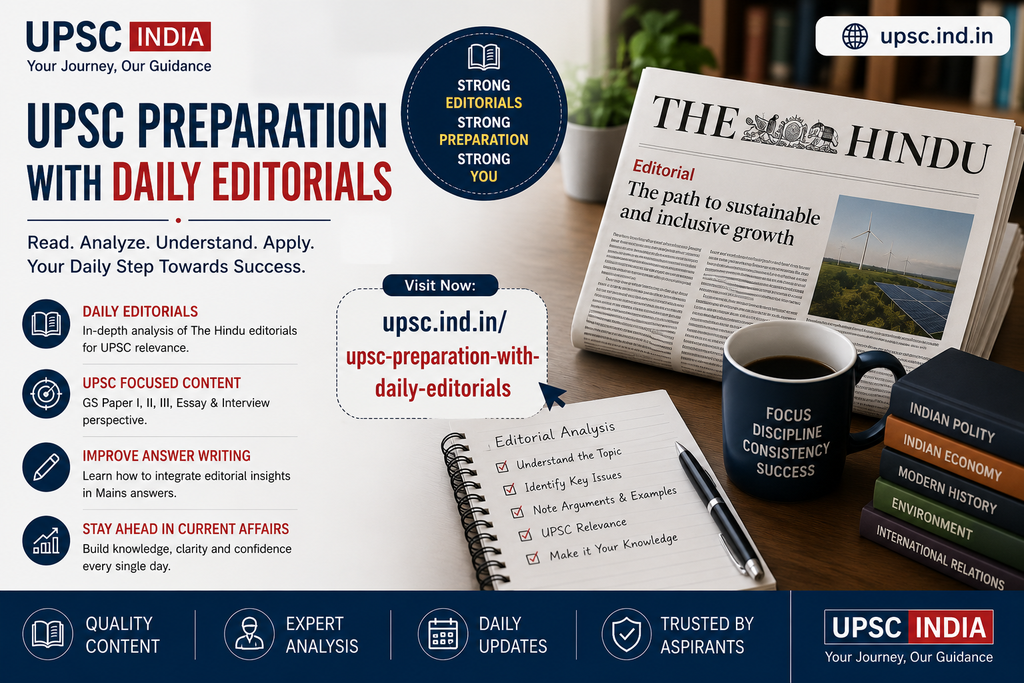
What Is The Hindu Newspaper PDF?
The Hindu Newspaper PDF refers to the digital replica of the physical newspaper, often available through the official ePaper subscription. It is essentially a scanned or digitally rendered version of the print edition. You can access the official ePaper directly through The Hindu’s official website, which offers both free and premium subscription options.
Key Features:
- ePaper Format: It looks exactly like the physical paper, helping you maintain the habit of scanning the “Front Page.”
- Accessibility: Available on smartphones, tablets, and laptops.
- Portability: You can carry a month’s worth of newspapers in your pocket.
- Daily Availability: It is updated every morning, usually before 7:00 AM IST.
While the The Hindu ePaper is a paid service, many free platforms and Telegram channels circulate the The Hindu PDF Today for educational purposes. However, for the best quality and legal access, subscribing to the official ePaper is recommended. If you are looking for a free, reliable summary of the day’s most important news, check out the daily updates on UPSC India’s platform (upsc.ind.in).
Benefits of Reading The Hindu Newspaper PDF Daily
Why should you switch from the physical paper to the The Hindu Newspaper PDF Download method?
1. Current Affairs Improvement
The PDF allows you to zoom in on graphics, diagrams, and infographics. UPSC often asks questions based on maps and charts printed in the newspaper.
2. Better Answer Writing
Reading well-structured editorials daily improves your sentence construction. You learn how to argue a point logically, which is crucial for the 250-word answers in Mains. The National Council of Educational Research and Training (NCERT) also emphasizes the importance of reading comprehension and analytical writing, both of which are honed through daily newspaper reading.
3. Vocabulary Enhancement
The language used in The Hindu is slightly above average. Regular reading naturally improves your English, which is essential for the Essay Paper and the Interview.
4. Editorial Understanding
With a PDF, you can easily highlight and annotate text using apps like Adobe Acrobat or GoodNotes. This active reading improves retention.
5. Interview Preparation
Having a daily archive of The Hindu Current Affairs allows you to review the entire year’s major events before your Personality Test.
At UPSC India (upscind.com), we take this a step further by providing curated editorial analysis and answer-writing frameworks that help you convert your daily reading into exam-ready content.
How to Read The Hindu Newspaper for UPSC Effectively
Time is the most precious commodity for an aspirant. You cannot read the paper like a casual reader. You must read it like a strategist.
Sections to Read (High Priority)
- Front Page: Read the headlines and first 2-3 paragraphs of every lead story. This forms the core of your Daily The Hindu PDF notes.
- National News (Pages 2-4): Focus on policy announcements, parliamentary proceedings, and judicial verdicts. Skip state-level political squabbles unless they have national implications. For authentic government announcements, always cross-check with PIB releases.
- International News: Focus on India’s neighbors, global organizations (UN, WTO), and treaties.
- Economy: Read about RBI policies, budget, agriculture, and infrastructure. This is a goldmine for GS Paper III.
- Science & Technology: Focus on space missions (ISRO), health, biotech, and defense technology.
- Editorial Page (The “Op-Ed”): This is the most important page of the paper. Read both the “Lead” articles and the “Columns.”
- Explained Section: Do not skip this. It provides background context to current issues, helping you build a strong foundation.
Sections to Skip
- Sports: Unless it involves a major international event like the Olympics or a national policy like the Sports Code.
- Entertainment: Skip movie reviews and celebrity gossip.
- Local Crime Reports: Not relevant to the UPSC syllabus.
- Advertisements: Pure time waste.
For a detailed breakdown of how to prioritize your preparation, download our free study planner available on UPSC India (upsc.ind.in).
The Hindu Newspaper PDF vs Other Newspapers for UPSC
While Indian Express and Times of India are excellent papers, they serve different purposes for a UPSC aspirant.
| Feature | The Hindu | Indian Express | Times of India |
|---|---|---|---|
| Editorial Quality | Excellent (Balanced, Academic) | Very Good (Analytical) | Average (General) |
| UPSC Relevance | Very High (Direct overlap with syllabus) | High (Good for Social Issues) | Low (Focus on Entertainment/Urban) |
| Analysis Depth | Deep (Explains policy background) | Deep (Investigative) | Shallow (Event reporting) |
| Current Affairs Coverage | Comprehensive | Comprehensive | High Volume, Low Value |
The Verdict: For the UPSC, The Hindu Newspaper PDF is non-negotiable. You may supplement it with Indian Express, but you cannot replace it. To see how we compare and analyze news from multiple sources into one concise format, visit UPSC India’s analysis hub (upscind.com).
How The Hindu Editorial Analysis Helps in UPSC Mains
The difference between a Prelims qualifier and a Mains topper often comes down to how they use the editorials.
- GS Paper II: Editorials on federalism, judiciary independence, and electoral reforms give you ready-made arguments to use in Polity answers.
- GS Paper III: Editorials on inflation targeting, AI regulation, and climate finance help you write high-scoring answers with real-time data.
- Essay Writing: The editorial page teaches you how to structure an argument: Introduction -> Body -> Counter-argument -> Conclusion.
- Ethics (GS IV): Editorials often discuss ethical dilemmas in public life (e.g., corporate governance, medical ethics). These can be used as case studies.
- Interview: When the board asks, “What is your opinion on the latest trade deal?”, you can confidently quote the editorial stance from The Hindu.
For additional analytical resources, you can refer to PRS Legislative Research, a highly respected non-profit that provides in-depth analysis of parliamentary bills and policies, which pairs perfectly with your newspaper reading.
Our team at UPSC India (upsc.ind.in) publishes daily editorial summaries and Mains-specific answer frameworks to help you master this skill faster.
Common Mistakes Aspirants Make While Reading The Hindu
- Reading everything: Treating the newspaper like a novel. You don’t need to read every page.
- Making notes while reading: This breaks the flow. Read first, underline, and then make notes at the end.
- Copying headlines: Writing down “India signs deal with Japan” is useless. Note down “Why” and “Impact.”
- Ignoring the “Explained” page: This is the most UPSC-friendly content in the paper.
- Skipping the Editorials: Aspirants often avoid them due to difficulty. You must push through; it gets easier.
- No revision: You read today’s paper and forget it tomorrow. You must revise your current affairs notes weekly.
- Hoarding PDFs: Downloading 100 The Hindu Newspaper PDF files and never reading them. Consistency beats volume.
- Focusing on Opinions over Facts: For Prelims, focus on facts (dates, names, places). For Mains, focus on opinions/analysis.
- Reading a month before the exam: Current affairs requires daily digestion over 12 months, not last-minute cramming.
- Switching sources: Sticking to The Hindu + one monthly magazine (like Yojana) is better than reading 5 different PDFs daily.
Avoid these pitfalls by following a structured approach. Access our complete guide on effective UPSC preparation strategies at UPSC India (upscind.com). You can also explore the Department of Personnel and Training (DoPT) website for official updates on civil services recruitment and training policies.
Daily Newspaper Reading Strategy for UPSC Aspirants
For Beginners (45–60 Minutes):
- Focus: Front Page, National News, Explained.
- Action: Try to understand the basic context of 5-6 major news stories.
- Goal: Build the habit. Don’t worry about note-making yet.
For Intermediate Aspirants (60–90 Minutes):
- Focus: Front Page, Economy, International, Editorials (Read at least 2).
- Action: Underline key points. Start making one-page notes on major topics.
- Goal: Link static syllabus (e.g., Constitution) with current news.
For Serious UPSC Candidates (90–120 Minutes):
- Focus: Entire paper (excluding skipped sections), 4 Editorials, Explained page.
- Action: Detailed note-making in digital apps. Extract keywords and data for answers.
- Goal: Develop an “Editorial Summary” for your revision folder.
Need a customized study plan? Explore our premium resources and mentorship programs at UPSC India (upsc.ind.in).
Frequently Asked Questions
1. Is The Hindu Newspaper PDF enough for UPSC?
Yes, for the “Current Affairs” component, The Hindu is largely sufficient. However, you must supplement it with NCERTs for static subjects and government reports like the Economic Survey.
2. Which sections of The Hindu are important?
Editorial Page (Op-Ed), Explained Page, Front Page, Economy, and Science & Tech are crucial.
3. How much time should I spend reading The Hindu?
Ideally, 60 to 90 minutes. Never exceed 2 hours, as you need time for other subjects.
4. Is The Hindu better than Indian Express?
For language clarity and syllabus alignment, The Hindu is generally preferred. Indian Express is excellent for investigative journalism and social issues, serving as a good supplement.
5. Can beginners start with The Hindu Newspaper PDF?
Yes, but beginners should start with the “Explained” section and “International News” before moving to the dense editorials.
6. How should I make notes from The Hindu?
Use a digital tool (Notion/Evernote). Create topics (e.g., “Economy,” “IR”). Under each topic, write 3-4 bullet points on “What happened?” and “Why it matters for UPSC?”
For more such FAQs and expert answers, visit our comprehensive knowledge base at UPSC India (upscind.com).
Conclusion: Master the Newspaper, Master the Exam
The The Hindu Newspaper PDF is more than just a document; it is your daily syllabus update. By mastering the art of reading this newspaper, you equip yourself with the knowledge, vocabulary, and analytical perspective required to crack the UPSC exam.
At UPSC India, we understand the importance of high-quality resources. While you focus on analyzing the The Hindu ePaper PDF, we provide the streamlined current affairs analysis and study materials to help you consolidate that information.
Ready to take your preparation to the next level?
- Bookmark this page for your daily reading strategy.
- Share this article with your fellow aspirants in your study group.
- Subscribe to UPSC India (upscind.com) for daily current affairs, editorial analysis, and strategic guidance.
- Explore our learning ecosystem at upsc.ind.in for comprehensive study materials and preparation tools.